
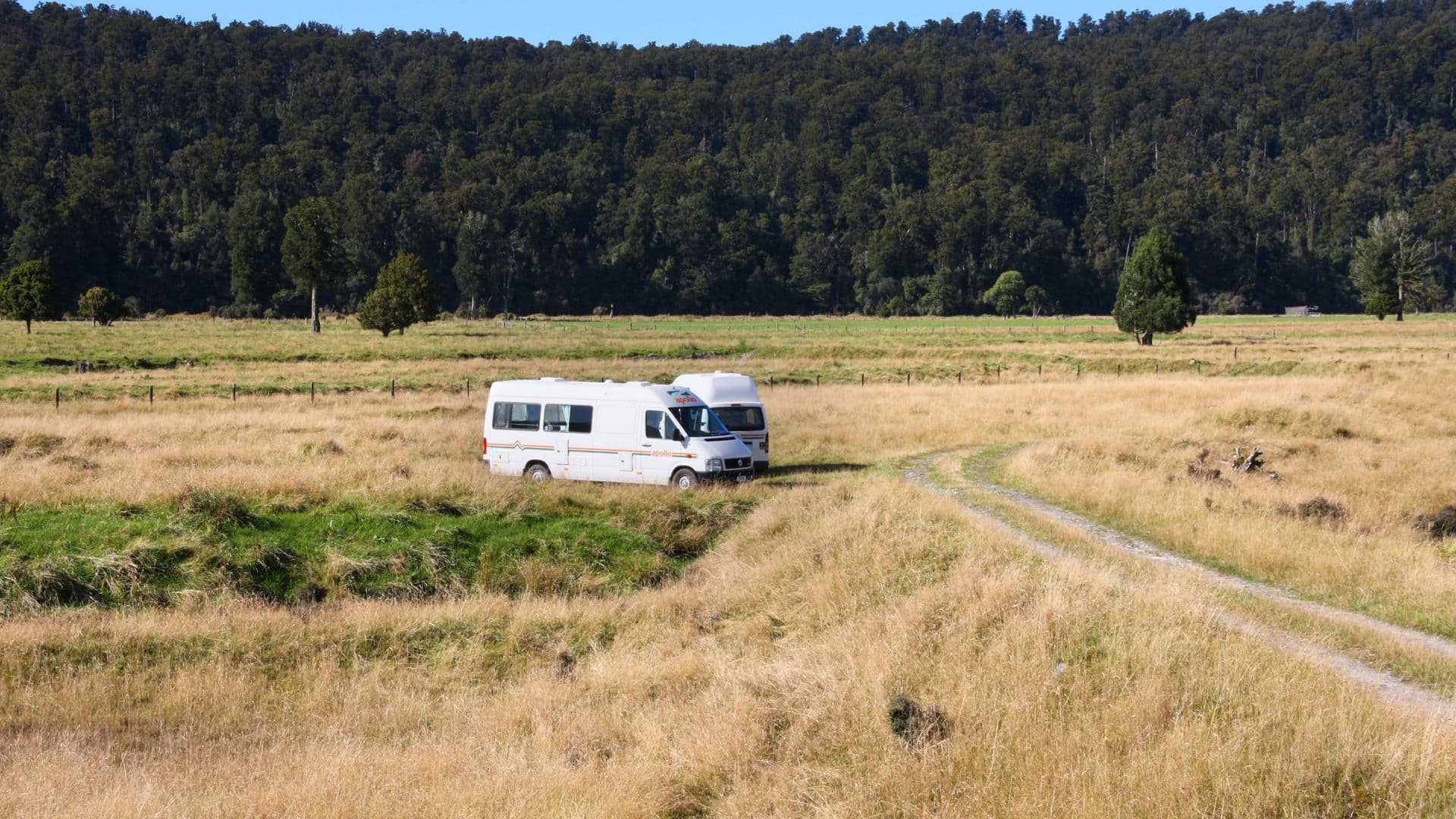
Freedom Camping in New Zealand — Rules, Self-Contained Certification and Fines in 2027
New Zealand was long known as a country where you could sleep in a campervan almost anywhere. That is no longer the case. The 2023 self-contained vehicles law tightened the rules: free overnight stays outside campgrounds, known as freedom camping, are now allowed in most places only for vehicles with the new green certification, and fines are higher. The good news is that the country is still full of cheap and beautiful places to spend the night; you just need to know how to find them.
Where freedom camping is allowed
- Council land. Each local council has its own camping bylaw with a map: zones where overnight stays are prohibited (usually town centres, popular beaches and parks), zones open only to certified vehicles, and zones where it is allowed with a limit on the number of nights. The maps are on council websites and signs on the ground back them up.
- Department of Conservation (DOC) land. On some conservation land freedom camping is allowed, on some it is banned, and in many national parks you may only stay at DOC campsites. These campsites are basic and cheap, often in the most beautiful spots in the country, and the most popular ones need booking ahead.
- NZMCA parks. The motor caravan association has its own overnight sites, but only for members with a certified vehicle.
- Campgrounds and private land. Holiday parks, campgrounds and staying on private land with the owner's permission are not affected by the new rules.
Self-contained certification after the law change
- What self-contained means. The vehicle must have a fixed toilet, a fresh-water tank, a grey-water tank and a rubbish bin with a lid, enough for at least three days without outside connections. A portable toilet no longer counts.
- The green warrant. Vehicles that meet the standard get a green warrant card on the windscreen and an entry in the national register. Rental campervans have needed the green warrant since December 2024, and for private vehicles the transition period with the old blue card ended in June 2026.
- What it means for you. If you plan to stay outside campgrounds, ask for a vehicle with the green warrant when you book. Smaller vans without a built-in toilet can only be used at campgrounds and at sites where certification is not required.
Fines and how they reach rental guests
The fine for most offences, such as staying where it is prohibited or without certification where it is required, is 400 New Zealand dollars, and it can be higher for more serious offences. The fine goes to the registered owner of the vehicle, that is, the rental company, which then charges it to your credit card with an admin fee, often weeks after you have returned home.
Planning the route
- Apps and maps. The CamperMate and Rankers apps show campgrounds, freedom camping sites, dump stations and recent reviews. Still, check the rules for each site on the sign or on the council map.
- The ferry between the islands. Interislander and Bluebridge sail between Wellington and Picton in about three and a half hours. In summer, campervan spaces sell out weeks ahead, so book the ferry as soon as you know your dates.
- Distances and roads. Auckland – Wellington is about 640 km, Picton – Christchurch about 340 km, Christchurch – Queenstown about 480 km and Queenstown – Milford Sound via Te Anau about 290 km. The roads are winding, with many one-lane bridges, so allow 250 to 350 km per driving day.
- Charges for diesel vehicles. Diesel vehicles in New Zealand pay road user charges per kilometre driven. With a rental campervan they are sometimes included in the price and sometimes billed per kilometre on return, so ask.
- Season. December to February is peak season and everything needs booking. March, April, October and November are quieter and often the most beautiful. In winter, roads over the South Island's mountain passes, such as the Crown Range and the road to Milford Sound, are often snowy and require chains.
- Driving licence and speed. New Zealand drives on the left. A licence in English is valid for up to 12 months; if yours is not in English, you need an International Driving Permit or an approved translation. The limit is 100 km/h, 110 km/h on some motorways, and 90 km/h for vehicles over 3,500 kg.
A campervan in New Zealand through Crystalium Booker
We have detailed guides for individual places: Auckland, Wellington and Queenstown. We are still building our campervan offer in New Zealand. Send us your dates, route and group size through the contact page and we will look for a vehicle for you, and keep an eye on the campervans in Auckland page for new listings. Do you hire out a campervan in New Zealand? List it with us.
Frequently Asked Questions
Is freedom camping allowed in New Zealand?
Partly. Councils and the Department of Conservation decide where you may stay outside campgrounds, and most such sites now only take vehicles with the green self-contained warrant. Town centres and popular beaches are mostly off limits.
Do I need a self-contained campervan?
If you want to stay outside campgrounds, yes. The vehicle needs a fixed toilet, fresh-water and grey-water tanks and the green warrant. Campervans without it can only be used at campgrounds and holiday parks.
How much is the fine for camping where it is not allowed?
For most offences 400 New Zealand dollars, and more for serious ones. With a rental vehicle the fine goes to the rental company, which charges it to your card with an admin fee.
Do I need to book the ferry between the North and South Islands?
Yes, especially in summer. Interislander and Bluebridge sail between Wellington and Picton in about three and a half hours, and campervan spaces sell out weeks ahead in season.
Related articles
Campervan Hire Auckland — North Island Routes, Camping and Tips for 2027
By campervan from Auckland: Bay of Islands, Coromandel, Rotorua and Taupō. The North Island loop, where to stay, freedom camping, tolls and season.
Campervanning in Spain — Overnight Parking vs Camping, Áreas de Autocaravanas and Low-Emission Zones in 2027
Campervanning in Spain: where you may sleep overnight and where not, how áreas de autocaravanas and campsites work, and low-emission zones in Madrid and Barcelona.
Renting a Campervan in the USA as a European — Licence, Insurance, Mileage and Campgrounds in 2027
What European guests need to rent a campervan or RV in the USA: driving licence, insurance, per-mile charges, campground types and tips for Florida.
Rent a camper today
View all campers for rent