
Campervan Hire Girona — Costa Brava, the Dalí Triangle, Garrotxa Volcanoes, the Pyrenees and Tips for 2027
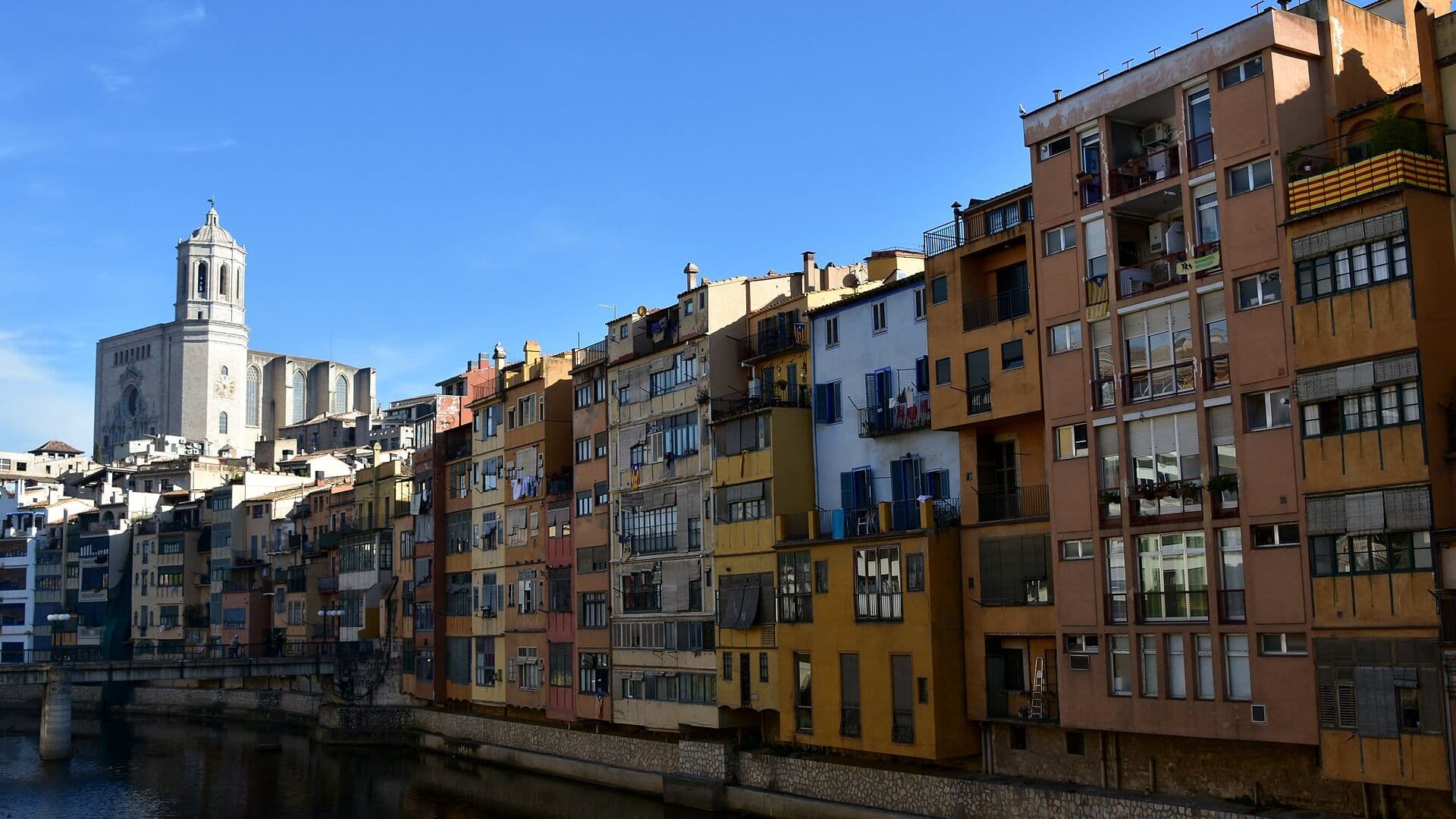
Girona, on the banks of the Onyar River in north-eastern Catalonia, is one of the best-preserved medieval cities in Spain: the colourful houses along the river, the long flight of steps up to the cathedral, the narrow streets of the Jewish quarter and the walk along the old city walls. For a campervan trip it is a perfect base: the coves of the Costa Brava are less than an hour away, the Dalí Triangle of Figueres, Púbol and Cadaqués just a little further, inland lie the medieval villages and extinct volcanoes of Garrotxa, and the Pyrenees begin within two hours' drive. This guide covers routes, overnight stops and the rules that visitors most often run into.
Girona itself
The Barri Vell, the old town, rises above the Onyar. Climb the 90 steps to the cathedral, which has one of the widest Gothic naves in the world, walk through the Call, one of the best-preserved Jewish quarters in Europe, and follow the Passeig de la Muralla along the medieval walls for views over the rooftops. In May, during the Temps de Flors festival, courtyards, churches and streets are filled with flower displays. Park the campervan outside the old town and walk in.
The Costa Brava
- Tossa de Mar (about 40 km): the only fortified medieval town on the Catalan coast, with walls and towers above the beach.
- Calella de Palafrugell, Llafranc and Begur (about 45 km): fishing villages, small coves with clear water and the Camí de Ronda, the coastal path between them.
- L'Escala and Empúries (about 45 km): the ruins of a Greek and Roman town by the sea, and the anchovies of L'Escala.
- Aiguamolls de l'Empordà (about 50 km): a wetland nature park with birdwatching hides and walking trails between Empuriabrava and Sant Pere Pescador.
- Roses and Cap de Creus (about 60–75 km): a wide bay with long beaches, and the wild, rocky Cap de Creus Natural Park, the easternmost point of the Iberian Peninsula.
The Dalí Triangle
- Figueres (about 40 km): the Dalí Theatre-Museum, the artist's own museum, built in the ruins of the old town theatre, where he is also buried.
- Púbol (about 25 km): the castle that Dalí bought and decorated for his wife Gala.
- Cadaqués and Portlligat (about 75 km): the white fishing village and the bay where Dalí lived and worked; his house in Portlligat can be visited only with a booked ticket.
Inland and the Pyrenees
- Banyoles (about 20 km): the largest natural lake in Catalonia, with a walking and cycling path around it.
- Besalú (about 35 km): a medieval village with a fortified Romanesque bridge over the Fluvià River and a Jewish ritual bath.
- Garrotxa Volcanic Zone and Olot (about 55 km): dozens of extinct volcanoes covered in forest, the beech wood of La Fageda d'en Jordà and the village of Castellfollit de la Roca on a basalt cliff.
- Vall de Núria (about 95 km): a mountain valley that can only be reached by the rack railway from Ribes de Freser, with hiking trails in summer and skiing in winter.
For more of Catalonia, read our guide to campervan hire in Barcelona, and if you want to see the Costa Brava from the sea, check out the boats in Roses.
Where to stay
- Campsites: many on the Costa Brava and inland, from simple sites to large holiday parks with pools; in July and August book ahead.
- Motorhome service areas: several towns in the province have aires with water, waste disposal and sometimes electricity.
- Coastal towns: in summer many towns on the Costa Brava ban motorhomes from overnight parking, and the police do fine; check the signs.
- Parking versus camping: parking is allowed like any other vehicle, but putting out the awning, chairs or levelling blocks on the street counts as camping and is not.
Driving tips
- Motorways. The AP-7 runs from the French border past Figueres and Girona towards Barcelona; the coast roads are winding and slow.
- Narrow roads. The roads to Cadaqués, Begur and the coves are narrow and steep, with little room for large vehicles; drive carefully and park outside the villages.
- Tramuntana. Strong gusts on the Empordà plain and at Cap de Creus can push the campervan; slow down and check the forecast.
- Low-emission zones. Barcelona and several Catalan cities have low-emission zones; check that your campervan has the right environmental label.
- Summer traffic. In July and August the coast roads are busy; travel early in the morning or in the evening.
When to go
- May, June and September: the best time, warm and sunny, with a warm sea from June and fewer crowds.
- July and August: hot and very busy on the coast; book campsites ahead and spend the hottest days in the mountains.
- Spring and autumn: ideal for the city, the volcanoes of Garrotxa and hiking; in May Girona celebrates the Temps de Flors.
- Winter: mild on the coast and quiet in the villages; skiing in the Pyrenees.
A campervan in Girona with Crystalium Booker
We are still building up our campervan offer in Girona. Send us your dates and number of travellers through the contact page and we will look for a vehicle for you, and keep an eye on the campervans in Girona page for new listings. Do you rent out a campervan in or around Girona? List it with us.
Frequently Asked Questions
Where can I stay overnight with a campervan around Girona?
There are many campsites on the Costa Brava, especially around L'Escala, Pals, Roses and Tossa de Mar, and inland near Banyoles and Olot, and several towns in the province have motorhome service areas. Parking is allowed like any other vehicle, but camping on the street (awning, chairs, levelling blocks) is not, and many coastal towns ban motorhomes from parking overnight in summer.
Can I drive a campervan to Cadaqués?
Yes, but the road from Roses over the hills is narrow and winding, and parking for large vehicles in the village is very limited, especially in summer. It is best to leave the campervan in the car park at the entrance to Cadaqués and walk into the centre and on to Portlligat, or to arrive early in the morning.
What is the tramuntana and why does it matter?
The tramuntana is a strong, cold north wind that blows down from the Pyrenees over the Empordà plain and Cap de Creus, often for several days. Gusts can push a tall, light campervan sideways on open roads and bridges, so slow down, keep both hands on the wheel and check the forecast before driving along the coast.
When is the best time for a campervan trip from Girona?
May, June and September are ideal, with pleasant temperatures, a warm sea and fewer crowds on the Costa Brava. July and August are hot and very busy, and campsites should be booked ahead. In spring the city hosts the Temps de Flors flower festival, and autumn is a good time for the volcanoes of Garrotxa.
Related articles
Campervan Rental Pompano Beach, Florida — Hillsboro Lighthouse, Boca Raton, the Palm Beaches, Jupiter, Lake Okeechobee and Tips for 2027
By campervan from Pompano Beach: the pier and Hillsboro Lighthouse, Boca Raton, Delray Beach, Palm Beach, Jupiter and the shores of Lake Okeechobee.
Campervan Rental Clearwater, Florida — Clearwater Beach, Caladesi Island, Tarpon Springs, Fort De Soto and Tips for 2027
By campervan from Clearwater: the Gulf beaches, Caladesi and Honeymoon islands, Tarpon Springs, St. Petersburg, Fort De Soto and the manatees of Crystal River.
Campervan Hire Darwin — Litchfield, Kakadu, Katherine Gorge, the Stuart Highway and Tips for 2027
By campervan from Darwin: Litchfield's waterfalls, Kakadu's rock art and wetlands, Katherine Gorge and the Stuart Highway. Camping, crocodiles, dry season.
Rent a camper today
View all campers for rent