

Campervan and RV Rental Miami — the Everglades, the Florida Keys and Tips for 2027
Miami is the starting point for two classic Florida drives: west into the wetlands of the Everglades and south along the Overseas Highway to Key West. The rental depots are not by the beach but inland, around the airport and towards Fort Lauderdale. The city itself, and Miami Beach in particular, is no place for a campervan: parking garages have height limits, street parking for large vehicles is restricted and sleeping in a vehicle is prohibited. Pick the campervan up when you are leaving town.
The Overseas Highway to Key West
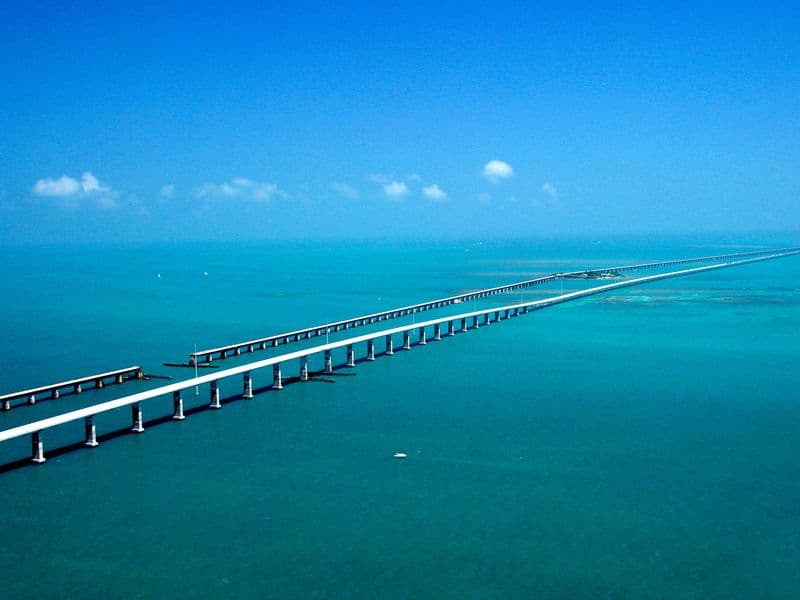
Miami to Key West is about 265 km (165 miles), three and a half to four hours without stops. US 1 hops from island to island over 42 bridges, the longest being the Seven Mile Bridge, almost 11 km long. Allow three to four days for the round trip.
- Key Largo (about 100 km, an hour and a half): John Pennekamp Coral Reef State Park, with snorkelling and glass-bottom boat trips over the coral reef.
- Islamorada and Marathon: fishing, the Turtle Hospital in Marathon and the start of the Seven Mile Bridge.
- Bahia Honda State Park (about 205 km): the best beaches in the Keys and a campground by the water.
- Key West: the southernmost city in the continental United States. The streets of Old Town are narrow, so leave the campervan at a campground on Stock Island and go into town by bus or bike.
The Everglades
- Shark Valley (about 65 km west on US 41, an hour's drive): a 24 km loop that you follow by tram or rental bike to an observation tower; alligators lie right beside the path. In winter the car park is full by mid-morning, so arrive at opening time.
- The road from Homestead to Flamingo (61 km one way): short boardwalk trails, among them the Anhinga Trail, and two campgrounds: Long Pine Key, open in the dry season, and Flamingo, with electric hookups, on the shore of Florida Bay.
- Big Cypress and the Gulf coast: the Tamiami Trail continues through Big Cypress National Preserve to Naples, about 200 km from Miami.
Where to stay overnight
- State parks. They are the cheapest and the best located. Reservations open ten to eleven months ahead, and winter dates in the Keys are gone within minutes. It is worth checking for cancellations.
- National park campgrounds. Flamingo and Long Pine Key in the Everglades are booked online.
- Private RV parks. They have full hookups: electricity, water and sewer. In the Keys in winter a night often costs more than US$100.
- In Miami. The handiest base for the city itself is the county campground at Larry and Penny Thompson Park, in the south of the city next to the zoo.
- No wild camping. Sleeping in a vehicle on the street, at the beach or in a car park is prohibited in Miami Beach and throughout the Keys, and it is fined.
Driving and costs that guests forget
- Tolls. Florida's Turnpike and the expressways around Miami are tolled electronically only, with no booths. The rental company bills the tolls afterwards, usually with a daily fee. The Overseas Highway itself is free.
- Vehicle size. A typical American Class C motorhome is seven to nine metres long and more than three and a half metres high. A smaller campervan is easier to drive and park in the Keys and in the city. Watch out for gas station canopies and low branches.
- Mileage and generator. American rental companies often charge separately for miles driven above the included allowance and for generator hours. Read the quote to the end.
- Driving licence. An ordinary car licence is enough for a rental motorhome. A foreign licence is valid; if it is not in English, bring an international driving permit as well. The minimum driver age is usually 21, in some cases 25.
- Speed in the Keys. The road mostly has one lane in each direction, with limits of 45 to 55 mph (70 to 90 km/h). On Big Pine Key the limit is lower at night to protect the endangered Key deer. You can rarely overtake, so do not plan to the minute.
When to go
The dry season runs from December to April: days of 24 to 28 °C, dry air and few mosquitoes. It is also the high season, with the highest prices and full campgrounds. Hurricane season runs from 1 June to 30 November, peaking from August to October; summers are hot and humid, with downpours almost every afternoon and plenty of mosquitoes in the Everglades. November and late April to May are a good compromise.
A campervan in Miami through Crystalium Booker
We are still building our campervan offer in Miami. Send us your dates and group size through the contact page and we will look for a vehicle for you, and keep an eye on the campervans in Miami page for new listings. Do you rent out a campervan in or around Miami? List it with us.
Frequently Asked Questions
How long is the drive from Miami to Key West?
About 265 km (165 miles), three and a half to four hours without stops. For the round trip with stops in Key Largo, Marathon and Bahia Honda State Park, allow three to four days.
Can you sleep in a campervan on the street or at the beach in Miami and the Keys?
No. Sleeping in a vehicle on the street, at the beach or in a car park is prohibited in Miami Beach and throughout the Keys. You stay in state parks, national park campgrounds or private RV parks.
When is the best time for a campervan trip in South Florida?
From December to April, in the dry season. Prices are also highest then, so book campgrounds months ahead. Hurricane season runs from 1 June to 30 November.
Do I need a special licence to drive an RV in Florida?
No. An ordinary car licence is enough for a rental motorhome. If your licence is not in English, bring an international driving permit as well. Rental companies set a minimum driver age, usually 21.
Related articles
Renting a Campervan in the USA as a European — Licence, Insurance, Mileage and Campgrounds in 2027
What European guests need to rent a campervan or RV in the USA: driving licence, insurance, per-mile charges, campground types and tips for Florida.
Campervanning in Spain — Overnight Parking vs Camping, Áreas de Autocaravanas and Low-Emission Zones in 2027
Campervanning in Spain: where you may sleep overnight and where not, how áreas de autocaravanas and campsites work, and low-emission zones in Madrid and Barcelona.
Freedom Camping in New Zealand — Rules, Self-Contained Certification and Fines in 2027
Where you may freedom camp in New Zealand, what the green self-contained warrant means, how fines reach rental guests, and how to plan the route and ferry.
Rent a camper today
View all campers for rent