
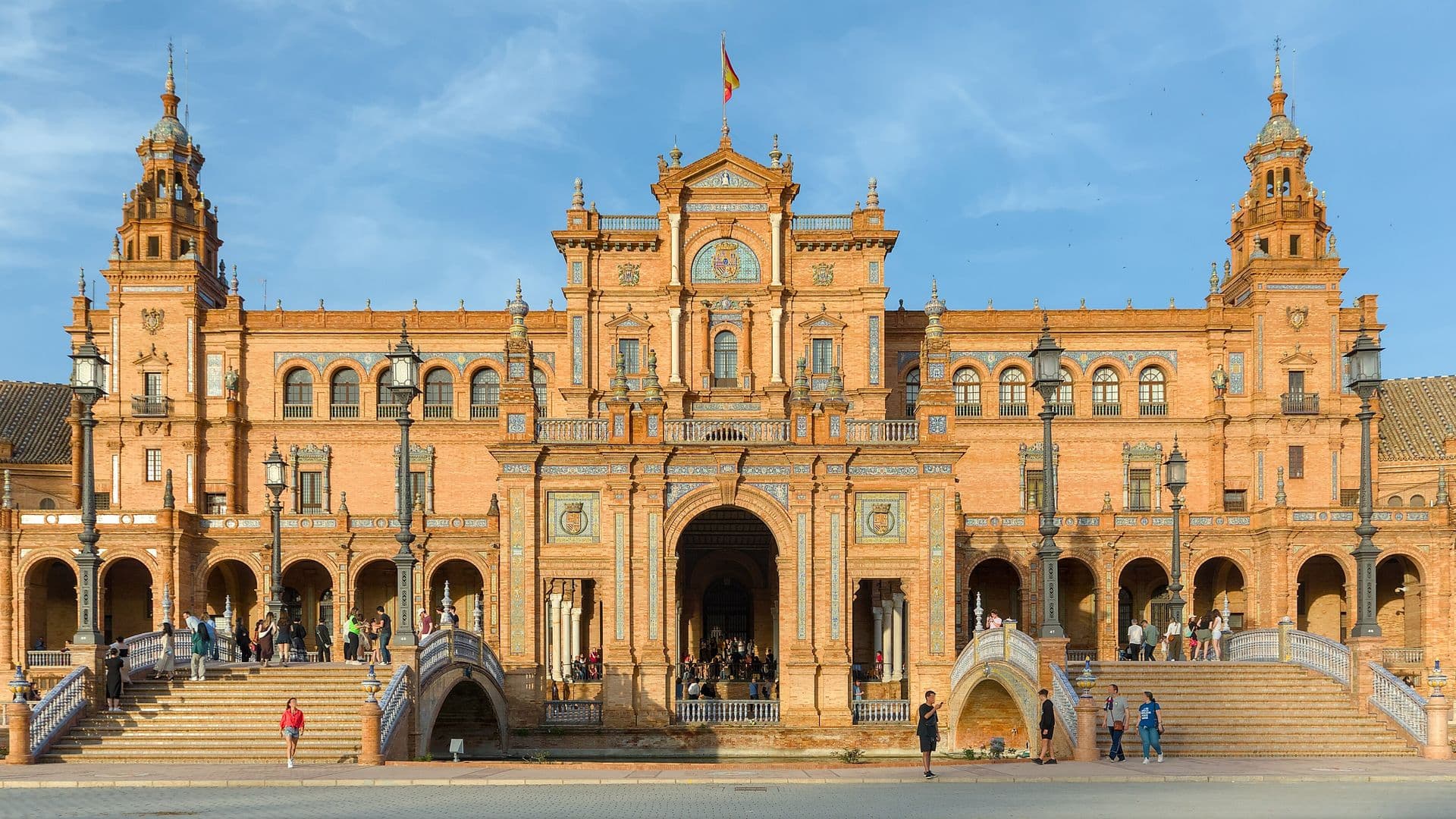
Campervan Hire Seville — The Andalusian Loop, Doñana and Tips for 2027
Seville is the natural starting point for a loop through western Andalusia: Córdoba, Ronda, the white villages and Cádiz are each one to two hours apart, and almost all the motorways are free. What you have to plan around is the heat. From mid-June to mid-September the Guadalquivir valley regularly reaches 40 °C, and a parked campervan becomes an oven. Come in spring or autumn, and leave the vehicle at the edge of the city while you visit it.
The Andalusian loop
- Córdoba (140 km). An hour and a half up the A-4. The Mezquita, the Roman bridge and the patios of the old town can be seen in a day; in May the courtyards are open for the Patios festival.
- Ronda and the white villages (about 170 km from Córdoba, 130 km from Seville). Ronda stands on both sides of a gorge about 100 m deep, joined by the Puente Nuevo. West of it lie the white villages of the Sierra de Grazalema: Setenil de las Bodegas, built under overhanging rock, Zahara de la Sierra, Grazalema and Arcos de la Frontera (85 km from Ronda by the main road).
- Cádiz and Jerez. From Arcos it is about 65 km to Cádiz, one of the oldest cities in western Europe, on a narrow peninsula. Jerez de la Frontera, with its sherry bodegas, is 35 km away on the way back, and from Jerez it is 90 km to Seville on the AP-4. The whole loop is about 600 km; allow a week.
- Doñana (80 km west). El Rocío, a village of sand streets on the edge of the marshes, is about 80 km from Seville by the A-49 and the A-483. The national park itself can be entered only on authorised 4x4 tours, from the El Acebuche visitor centre or from El Rocío; they take about four hours and should be booked ahead. The beach at Matalascañas is 15 km further on.
Where to sleep
- For visiting Seville. There are two guarded motorhome areas: one in the port, off Avenida García Morato south of the centre, with a bus to Puerta de Jerez in about 10 minutes (the stop is about 1 km away), and one at the Puerto Gelves marina, 6 km down the river, with a bus that takes about 15 minutes. Both are open ground without much shade. Do not drive into the old town: the streets are narrow, and access is restricted and watched by cameras.
- Córdoba, Ronda, Cádiz. Córdoba has a paid motorhome area about 20 minutes on foot from the Mezquita; long vehicles fit badly in some bays. In Ronda use Camping El Sur, 2 km south of the town, or the motorhome area on its edge. For Cádiz, stay across the bay at the beach campsite in El Puerto de Santa María and take the catamaran, about 30 minutes, instead of driving onto the peninsula.
- Doñana and the coast. El Rocío and Matalascañas have campsites. On the Costa de la Luz (Conil, Caños de Meca, Bolonia, Tarifa) campsites are plentiful, but in summer the police fine motorhomes that stay overnight in beach car parks.
- No wild camping. Free camping is prohibited in Andalusia. Spending the night in a legally parked vehicle, with nothing set up outside, counts as parking under the national DGT guidance, but nature parks and coastal municipalities forbid it locally.
Driving and the costs visitors forget
- Heat. In July and August the average afternoon in Seville and Córdoba is 36 °C, and 40 °C and more is common. Check that the living area of the vehicle has air conditioning that works when parked, which needs a mains hook-up; otherwise sleep on the coast or in the mountains (Grazalema, Sierra de Aracena) and visit the cities early in the morning.
- Tolls. The AP-4 between Seville and Cádiz has been free since 1 January 2020, and the A-4, A-49, A-92 and A-66 were always free. In Andalusia you pay only on the AP-7 along the Costa del Sol and on the AP-46 north of Málaga.
- Low-emission zone. Seville's zone covers the Isla de la Cartuja, on working days from 7 am to 7 pm, and applies to vehicles without a DGT environmental label; a campervan hired in Spain has one. The rules were being revised when this guide was written (autumn 2026), so check the city's website if you come in an older vehicle of your own.
- Festivals. In Holy Week and during the Feria de Abril, two weeks after Easter, Seville is full and the motorhome areas with it. At Pentecost about a million pilgrims travel to El Rocío, and the roads and campsites around Doñana are closed or packed.
- Mountain roads and wind. The road over the Puerto de las Palomas between Zahara and Grazalema is narrow, with hairpin bends; in a large motorhome go round by the A-374 and the A-384. Around Tarifa the levante, an easterly wind, can blow hard for days.
- Driving licence and speed. As elsewhere in Spain: category B covers vehicles of up to 3,500 kg, and a campervan up to that weight may drive 120 km/h on motorways and 90 km/h on other roads outside built-up areas. Rental companies usually ask for a minimum age of 23 to 25 and a licence held for at least two years.
When to go
The season runs from March to May and from mid-September to November: days of 20 to 28 °C, orange blossom in the streets of Seville in March, and green hills. April is the busiest and most expensive month because of Holy Week and the Feria. Summer is for the Atlantic coast, where the sea breeze keeps Cádiz at about 28 °C, not for the interior. Winter is mild and quiet: January days reach about 16 °C in Seville, the sky is often clear and the cities are at their emptiest, though it can rain for days and nights in the mountains drop to freezing.
A campervan in Seville through Crystalium Booker
We are still building our campervan offer in Seville. Send us your dates and group size through the contact page and we will look for a vehicle for you, and keep an eye on the campervans in Seville page for new listings. Do you hire out a campervan in or around Seville? List it with us.
Frequently Asked Questions
Where can you park a campervan to visit Seville?
In one of the two guarded motorhome areas: in the port, south of the centre (bus to Puerta de Jerez, about 10 minutes), or at the Puerto Gelves marina, 6 km away (bus, about 15 minutes). Do not drive into the old town; access is restricted and watched by cameras.
Is summer a good time for a campervan trip in Andalusia?
Not in the interior. In July and August Seville and Córdoba average 36 °C in the afternoon and often pass 40 °C. In summer stay on the Atlantic coast or in the mountains; the best months for the cities are March to May and mid-September to November.
How long does the Andalusian loop from Seville take?
Seville, Córdoba, Ronda, the white villages, Cádiz, Jerez and back is about 600 km. A week allows a night or two at each stop; add two days for Doñana.
Are there toll roads around Seville?
Almost none. The AP-4 to Cádiz has been free since 2020, and the other motorways from Seville were always free. In Andalusia tolls remain only on the AP-7 along the Costa del Sol and on the AP-46 north of Málaga.
Related articles
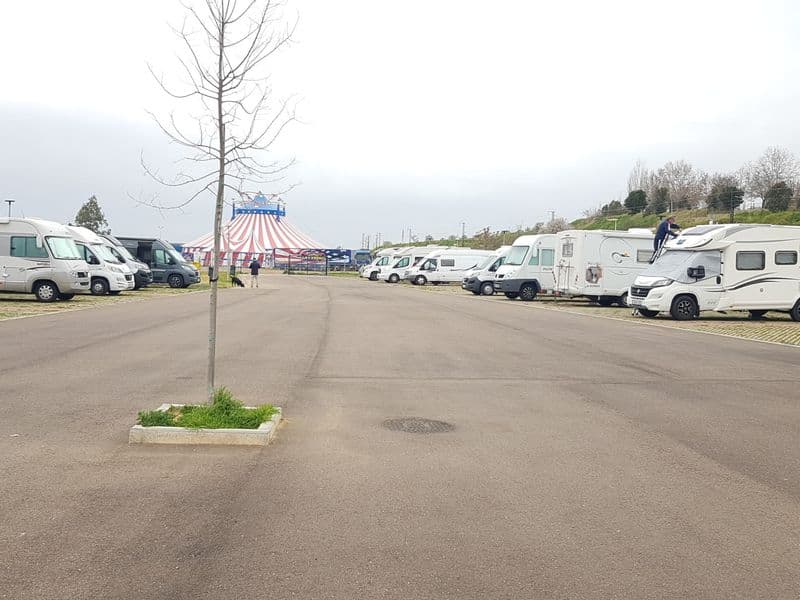
Campervanning in Spain — Overnight Parking vs Camping, Áreas de Autocaravanas and Low-Emission Zones in 2027
Campervanning in Spain: where you may sleep overnight and where not, how áreas de autocaravanas and campsites work, and low-emission zones in Madrid and Barcelona.
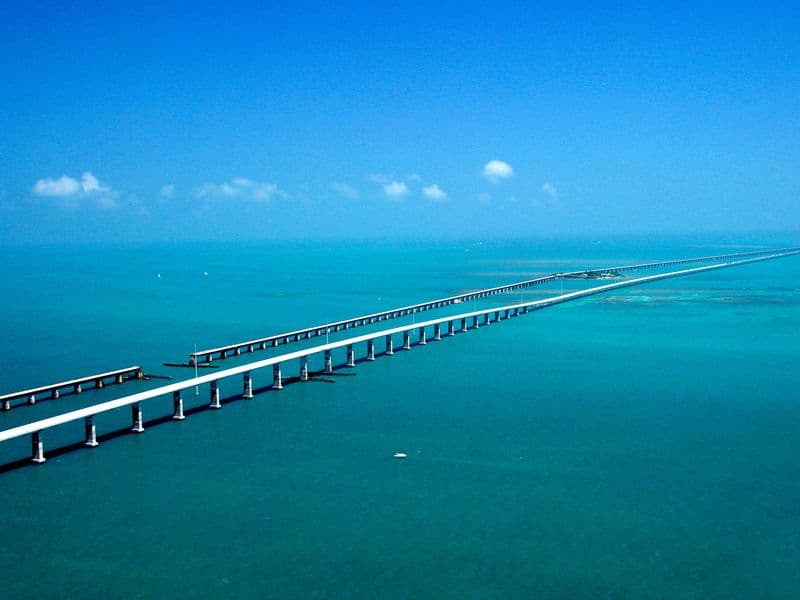
Renting a Campervan in the USA as a European — Licence, Insurance, Mileage and Campgrounds in 2027
What European guests need to rent a campervan or RV in the USA: driving licence, insurance, per-mile charges, campground types and tips for Florida.
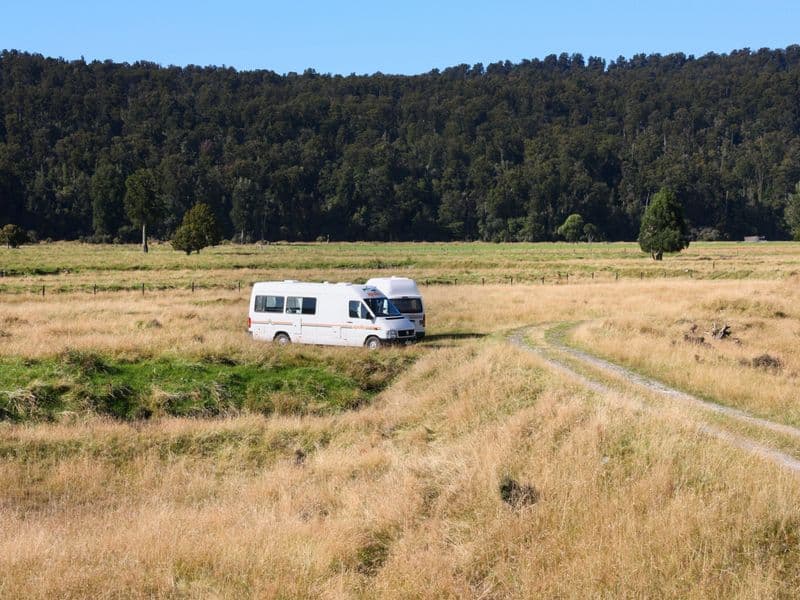
Freedom Camping in New Zealand — Rules, Self-Contained Certification and Fines in 2027
Where you may freedom camp in New Zealand, what the green self-contained warrant means, how fines reach rental guests, and how to plan the route and ferry.
Rent a camper today
View all campers for rent